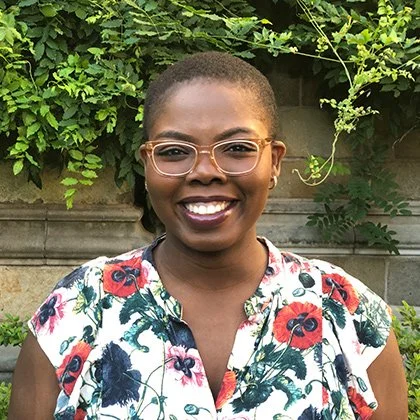
Toyosi Olowoyeye, MPH
I entered the world of consulting as a necessary pivot.
In 2014, I graduated with my Master of Public Health into a recession. The jobs I had trained for were not available. The organizations I wanted to serve were not hiring. So I made a different decision.
I changed my LinkedIn title to Consultant.
A former colleague saw it, reached out, and I had my first client. That is how Lumina Executive Consulting was born. Not from a grand plan. From a pivot, a recession, and one message from someone who believed in me before I had the infrastructure to back it up.
Twelve years and 1,500 leaders later, I know this: the work I transitioned into is the work I was made for.
welcome
What fifteen years in rooms with leaders taught me.
I have designed and delivered organization and leadership development programs on five continents. I have sat with teams in the middle of conflict and helped them find their way back to each other. I have redesigned programs that were not working mid-delivery and watched them outperform the original. I have built virtual learning infrastructure, led multi-country operations, and coached executives at the highest levels of global philanthropy, government, and the private sector.
What I have learned across all of it is consistent.
The organizations that grow are not the ones that invest in the most training. They are the ones that invest in the right foundation. And the foundation is always human. It is the quality of leadership. The health of the culture. The emotional infrastructure that allows people to do their best work under real conditions.
That is what I build.
The Work
I kept noticing the same gap.
Across every engagement, with government agencies, global health organizations, foundations, corporations, and law firms, I kept seeing the same thing. Leaders who were technically excellent. Leaders who understood their domain. And leaders who were struggling in the exact same ways: giving feedback that did not land, navigating conflict that stayed unresolved, building teams that functioned fine but never quite thrived.
The gap was not knowledge. It was emotional fluency.
The ability to regulate one's own internal state under pressure. To read a room accurately. To hold difficult conversations without either avoiding them or escalating them. To build trust not as a performance but as a genuine practice.
I built the Fluency™ Framework because I needed a rigorous, evidence-based methodology that treated these capacities the way they deserve to be treated: as learnable skills, not personality traits. As the core of leadership effectiveness, not its decorative edge.
The origin of the fluency™ framework
The credentials behind the practice.
I hold a Master of Public Health in Social and Behavioral Health from Texas A&M Health Science Center, where my training grounded me in behavioral psychology, organizational behavior, adult learning, and systems change theory. I am also an MBTI Certified Practitioner and hold advanced certifications in adult learning and facilitation, equity-centered leadership development, and AI integration and strategic design.
The client portfolio I have developed spans the full spectrum of mission-driven institutions in every sector: Bill & Melinda Gates Foundation, Hewlett Foundation, World Bank Group, USAID Bureau of Humanitarian Aid, Child Investment Fund Foundation, Global Health Corps, Cornell University, Yale University, EPA Office of Water, U.S. Forest Service International Programs, National Institute of Standards and Technology (CHIPS for America), and Institute for Nonprofit Practice.
background
Every engagement begins with a question, not an answer.
I do not arrive with a pre-built program and fit your organization into it. I arrive curious. What does your team actually need? What has been tried and has not worked? What does success look like 18 months from now, not just at the end of the training day?
Discovery shapes everything. The curriculum, the facilitation approach, the pacing, the language. Every engagement is built from the inside out, which is why the outcomes tend to last.